|
Cellufine A, Q en C
For protein peptide and other biomolecule
purification.
Cellufine Ion Exchangers are based on spherical particles manufactured from
crosslinked cellulose. Each offers excellent flow properties, mechanical
stability and chemical resistance. These ion exchangers are ideally suited for
both laboratory and process scale chromatography of proteins, peptides and other
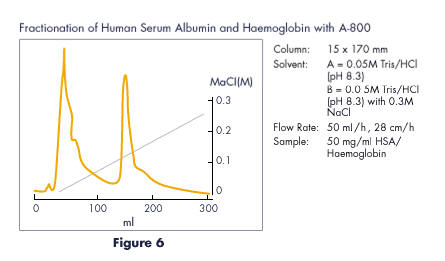
biomolecules. Applications include the purification of antibodies, growth
factors, albumin, enzymes, nucleic acids, etc.
Features:
• Spherical particles exhibiting high mechanical strength
• Choice of several pore sizes
• Hydrophilic
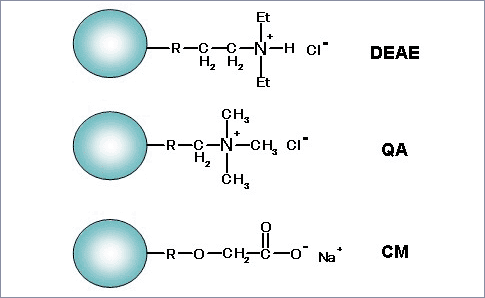
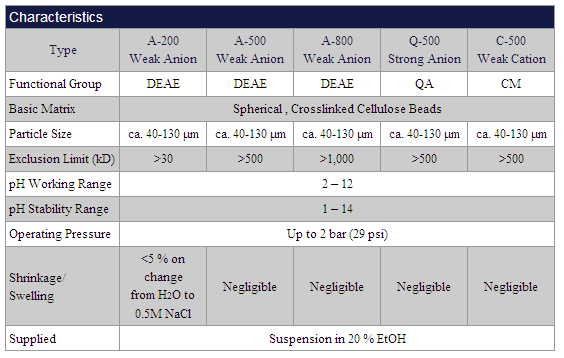
• DEAE (A), QA (Q) anion exchange and carboxylmethyl (C) cation exchange
• Pre-swollen
• Virtually no shrinkage or swelling
• Resistant to 0.5M NaOH
• Stable in organic solvents
• Autoclavable (121 °C for 30 minutes)
• Passes USP VI acute systemic implant tests
Benefits:
• High flow rates allowing rapid chromatography and direct scale-up
• Allows optimum capacity matched to molecular weight
• Low non-specific binding
• Optimal functionality selection
• Easy packing
• Easy large scale operation
• Easy regeneration and depyrogenation
• Allows alternative cleaning regimes
• Sterilizable
• Non toxic
• Regulatory support
Partial Structure:
Titration Curves:

Adsorption Capacity:

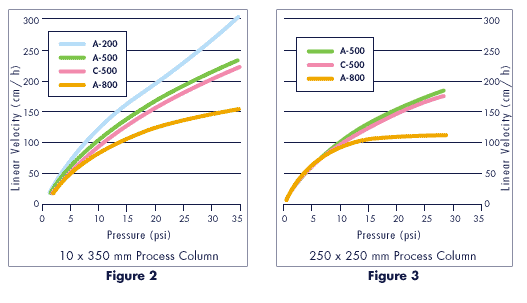
Flow Properties:
Pressure flow curves for Cellufine Ion Exchangers in laboratory and process
scale columns.
Mechanical Resistance:
Cellufine Ion Exchangers are semi-rigid due to the crosslinked structure which
gives high mechanical resistance and results in two advantages; no generation of
fines during the preparation of the column and higher operating bed height
without concern of bed collapse common to many ‘soft gels’.
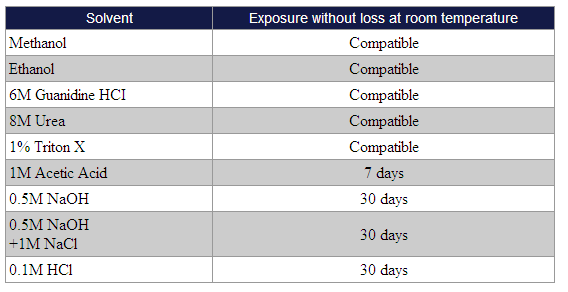
Chemical Resistance:
Cellufine is chemically stable. The media can be washed with a variety of
solutions and shows no loss in capacity, resolution or flow rates.
Applications:

|